
For pet owners in Hampton Roads, emergency preparedness is an important part of keeping pets safe. Whether facing hurricanes, flooding, power outages, or unexpected evacuations, having a plan in place before an emergency can make all the difference.
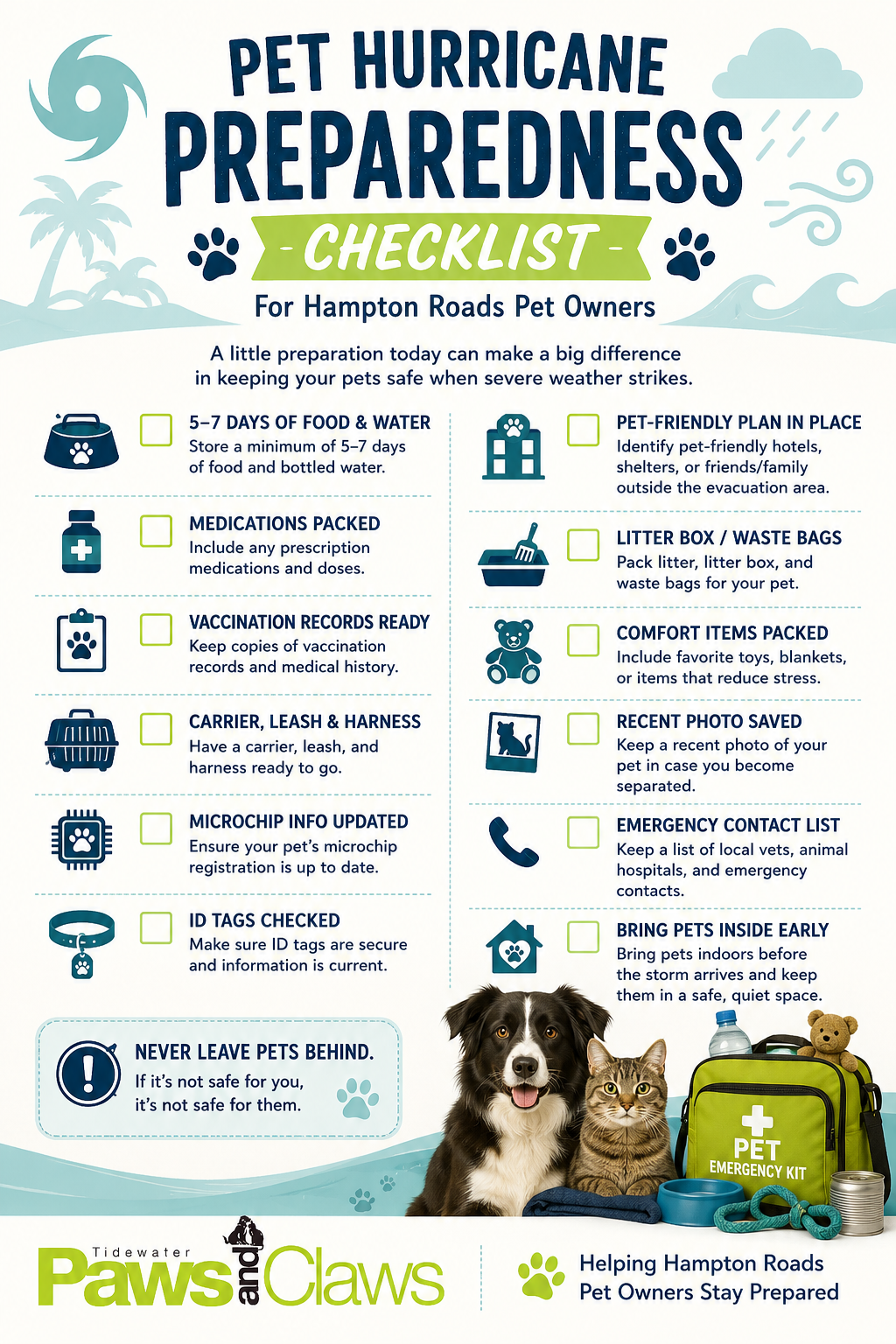
Pet Emergency Preparedness Checklist
Before an emergency happens, make sure you have:
✓ 5 to 7 days of pet food and bottled water
✓ Prescription medications packed and ready
✓ Vaccination and medical records accessible
✓ Carrier, leash, collar, and harness prepared
✓ Updated ID tags and microchip registration
✓ Waste bags, litter, or sanitation supplies
✓Puppy pads in case going outdoors isn’t an option
✓ Favorite comfort items for stress reduction
✓ Recent photos of your pet
✓ Emergency contact information saved
✓ Transportation plan if evacuation becomes necessary
Know Your Local Emergency Resources
Before hurricane season, identify local services you may need quickly.
Important resources to have ready:
Emergency veterinary hospitals in Hampton Roads
Pet-friendly hotels during evacuation orders
Local boarding facilities for temporary emergency stays
Animal shelters that provide emergency assistance
Family or friends outside evacuation zones
When a storm is approaching, monitor local news and social media for updates on shelter locations, opening times, and pet policies. Emergency procedures can vary with each storm, so don’t assume plans will be the same as previous events.
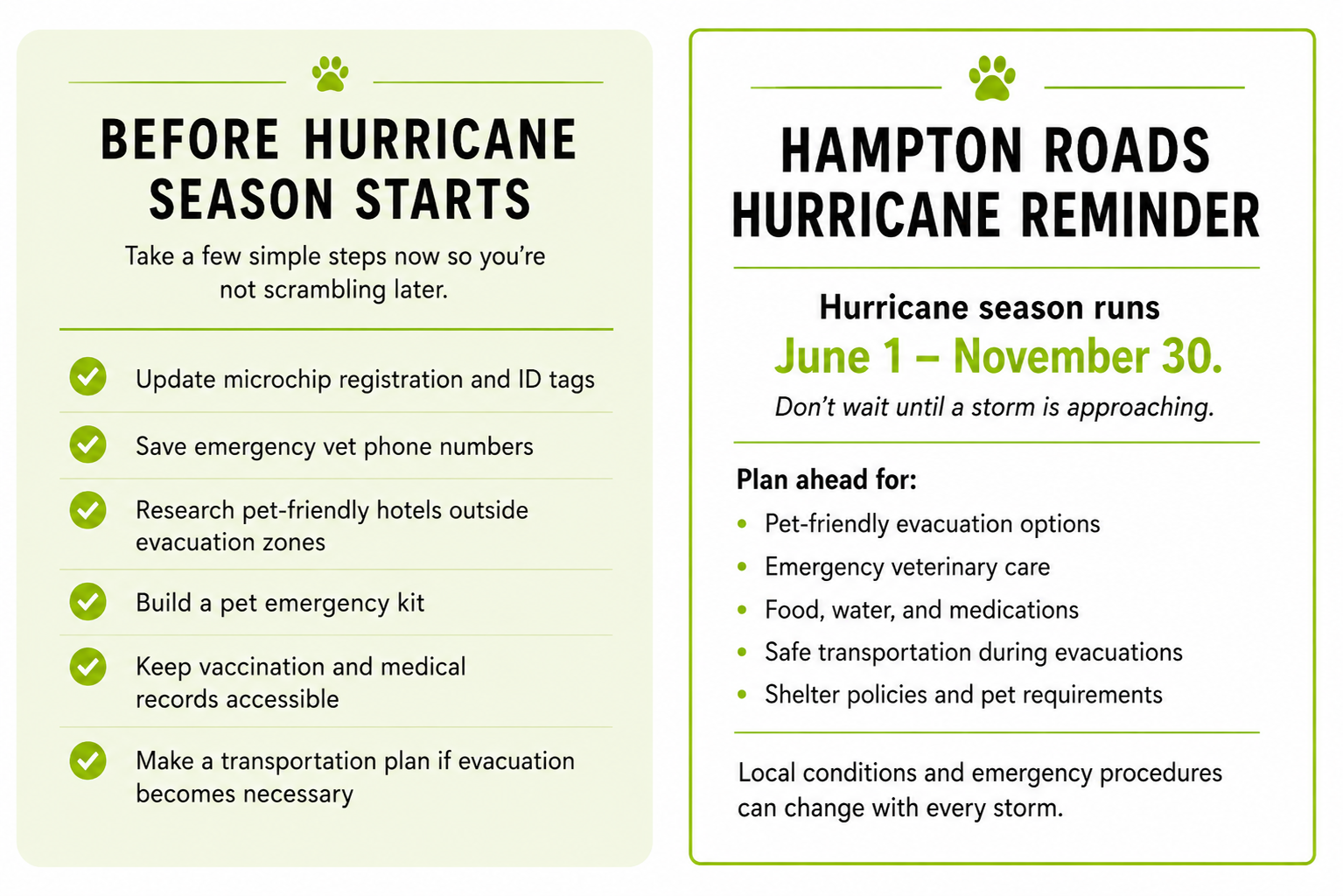
Decide where you might go should you have to evacuate. Making these plans now eliminate the need to panic when a storm is on the way.
Find pet-friendly hotels outside of the evacuation area. If it looks like evacuations are possible, make a reservation (be sure it can be canceled). That way, should the need to evacuate actually happen, you won’t have to worry about the place you’ve selected being fully booked.
Important Safety Tips During Severe Weather
When severe weather approaches:
Bring pets indoors before conditions worsen
Never leave pets outside during hurricanes or flooding
Keep pets leashed if unfamiliar people or environments are nearby
Monitor anxious pets closely during storms
Store extra food and water before supply shortages begin
After the Storm Passes
Even after weather conditions improve, risks remain.
Watch for:
Broken glass and storm debris
Standing flood water containing contaminants
Damaged fences or escape routes
Food spoilage during long power outages
Stress-related behavioral changes in pets
Don’t let your dog outside until you’ve inspected your yard for dangerous debris and possible escape routes.
Prepared pets are safer pets and preparation starts long before the storm arrives.