
Temperatures are rising. Learn about heatstroke symptoms, so you can protect your pets.
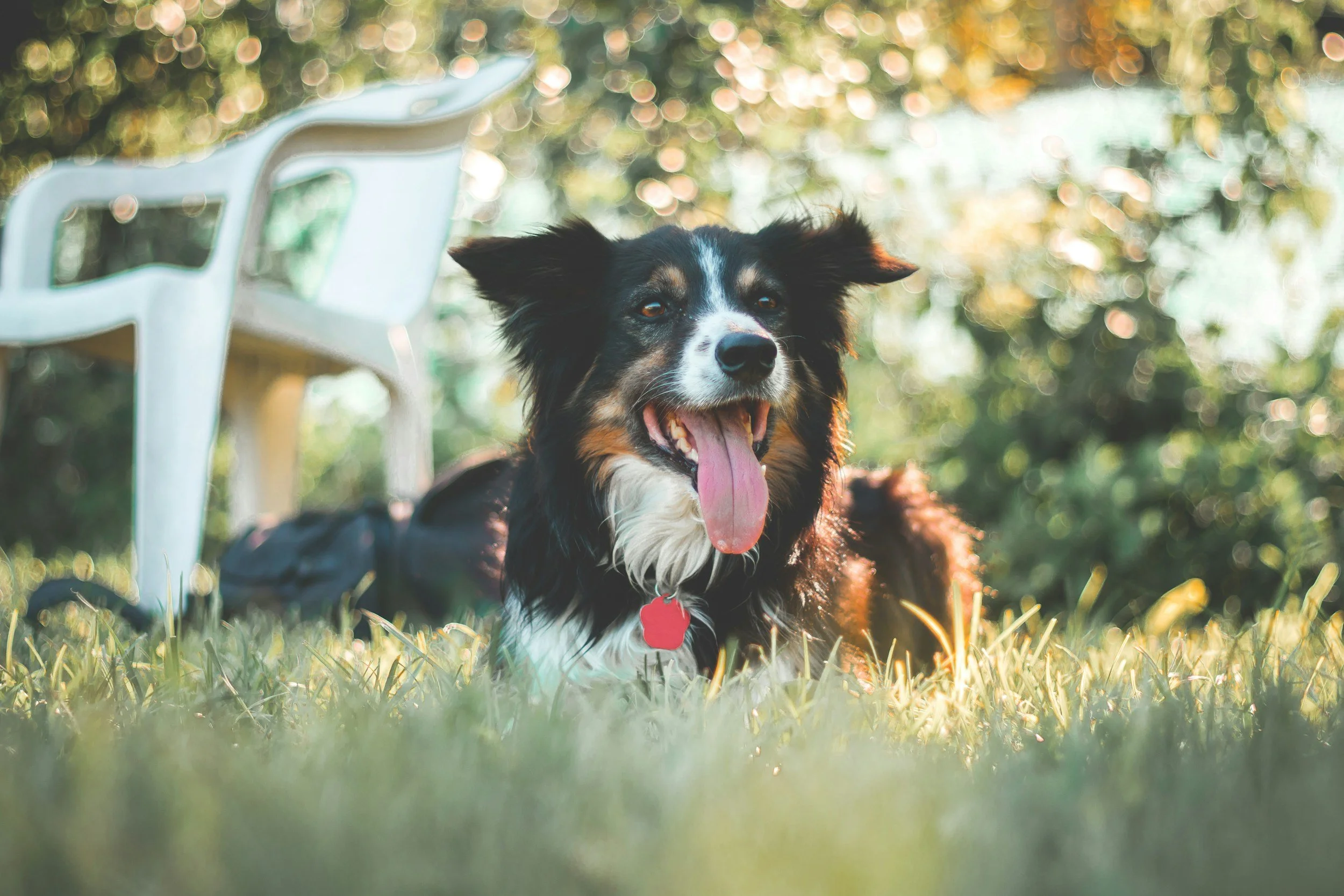
As temperatures climb across Hampton Roads, it’s important to recognize the signs of heat exhaustion and heat stroke in dogs. Whether it's a walk around the neighborhood, a trip to the park, or a day at the beach, summer fun can quickly become dangerous when dogs overheat.
Heatstroke is a serious and potentially life-threatening emergency that can develop rapidly, even on days that don't seem excessively hot. Knowing the warning signs can help save a dog's life.
Why Dogs Are Vulnerable to Heat
Unlike humans, dogs don't sweat through their skin to cool themselves. They primarily regulate body temperature through panting and limited sweating through their paw pads. When temperatures and humidity rise, this cooling system can become overwhelmed.
Certain dogs face an even higher risk, including:
Brachycephalic (short-nosed) breeds such as Bulldogs, Pugs, and Boxers
Senior dogs
Puppies
Overweight dogs
Dogs with heart or respiratory conditions
Dogs with thick or dark-colored coats
Early Signs of Heat Exhaustion
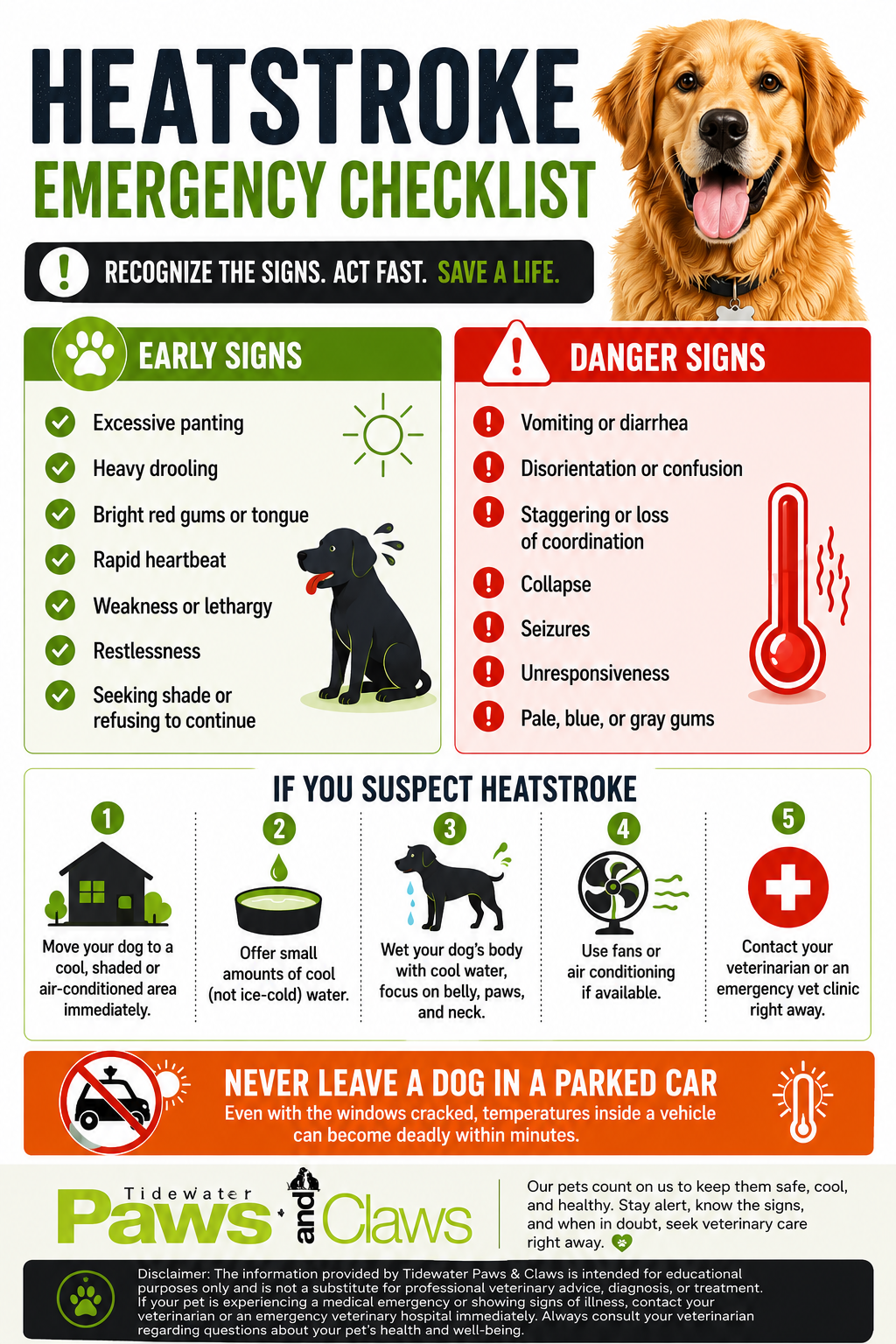
Heatstroke often begins with symptoms of heat exhaustion. Watch for:
Excessive panting
Heavy drooling
Bright red gums or tongue
Rapid heartbeat
Weakness or lethargy
Restlessness
Seeking shade or refusing to continue walking
At this stage, immediate action can often prevent a medical emergency.
Signs of Heatstroke
If a dog's body temperature continues to rise, symptoms may become severe and require urgent veterinary care. Warning signs include:
Vomiting or diarrhea
Disorientation or confusion
Staggering or loss of coordination
Collapse
Seizures
Unresponsiveness
Pale, blue, or gray gums
Heatstroke can cause damage to the brain, heart, kidneys, and other organs within a short period of time.
What To Do If You Suspect Heatstroke
If your dog is showing signs of heatstroke:
Move them immediately to a cool, shaded, or air-conditioned area.
Offer small amounts of cool (not ice-cold) water.
Wet the dog's body with cool water, focusing on the belly, paws, and neck.
Use fans or air conditioning if available.
Contact your veterinarian or an emergency veterinary clinic right away.
Avoid using ice baths or extremely cold water, which can actually make cooling more difficult.
Prevention Is the Best Protection
The easiest way to prevent heatstroke is to avoid prolonged outdoor activity during the hottest parts of the day. Schedule walks in the early morning or evening, provide plenty of fresh water, and never leave a dog unattended in a parked vehicle—even for a few minutes.
Remember that pavement can also become dangerously hot. If it's too hot for your hand, it's too hot for your dog's paws.
Summer should be a season of fun and adventure for pets and their families. By recognizing the signs of heatstroke and taking precautions, you can help ensure your canine companions stay safe, healthy, and happy all season long.
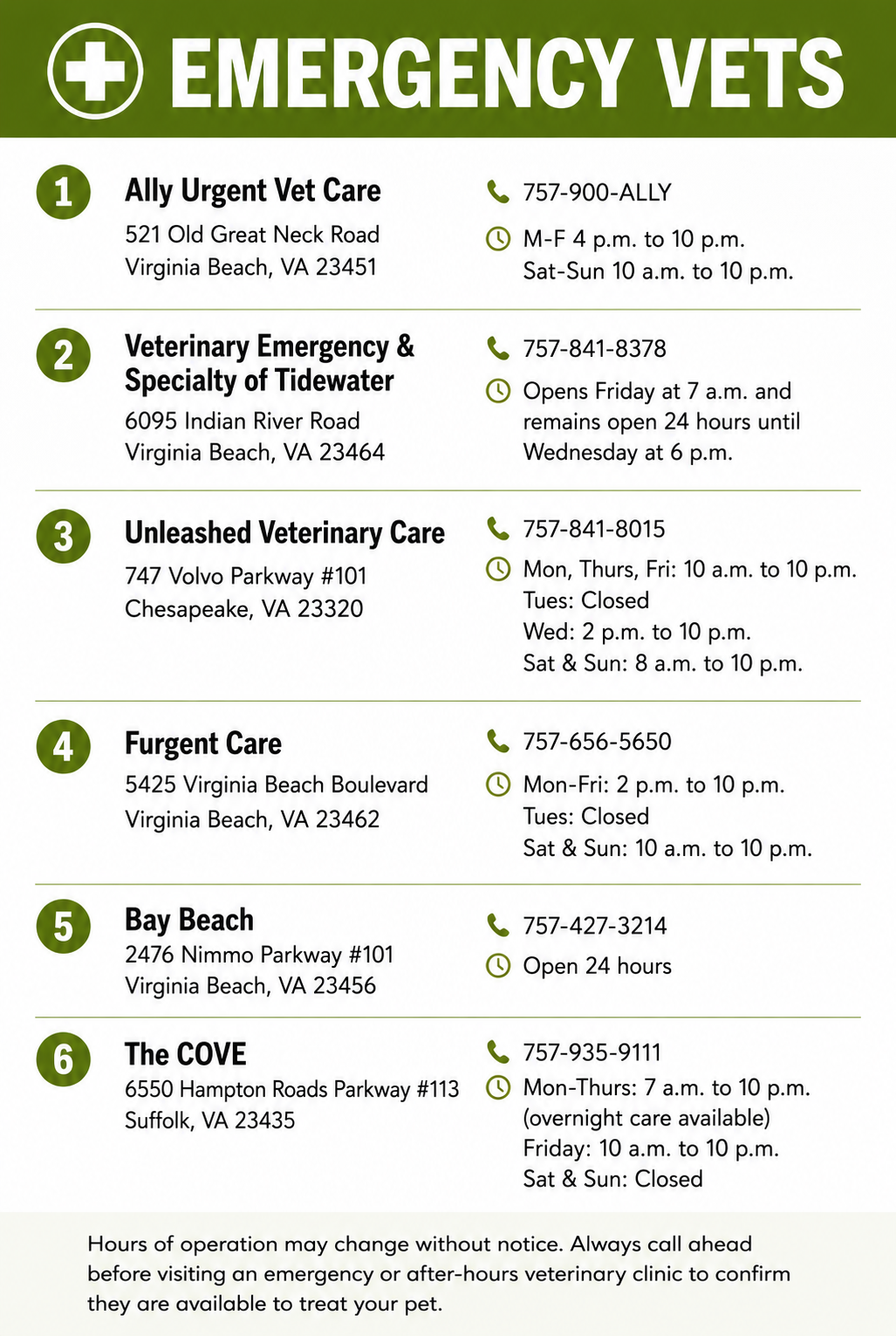
Make note of the emergency vets below in case you need services for your pet after hours or during a time when your regular vet has no availability.
The information provided by Tidewater Paws & Claws is intended for educational purposes only and is not a substitute for professional veterinary advice, diagnosis, or treatment. If your pet is experiencing a medical emergency or showing signs of illness, contact your veterinarian or an emergency veterinary hospital immediately. Always consult your veterinarian regarding questions about your pet's health and well-being.